 Sabine Herrmann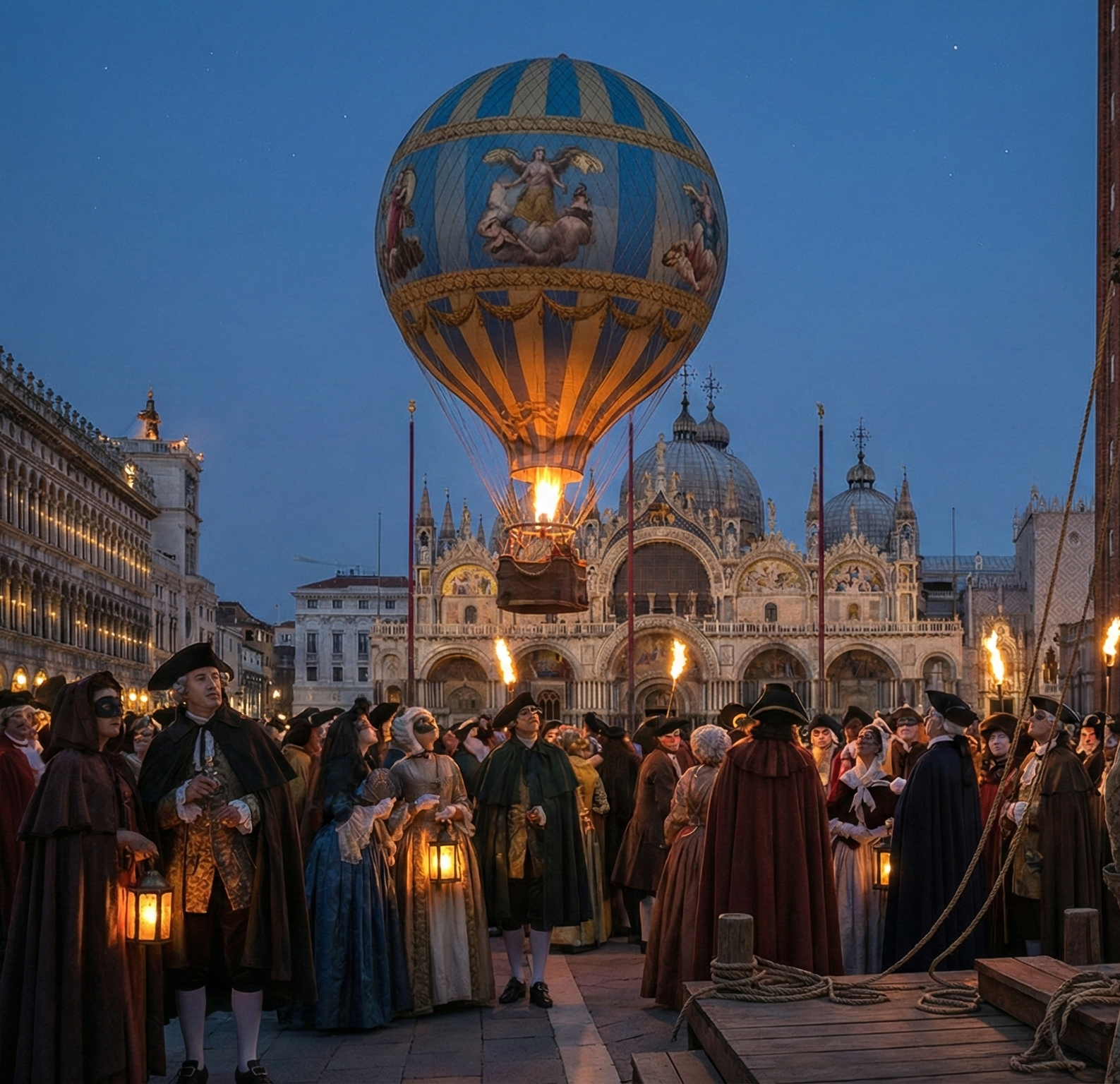
When the Montgolfier brothers inaugurated the first aerostatic flight in France in 1783, the whole of Europe became fascinated by this new marvel of technology.
Italy was not to be outdone: between 1783 and 1784 experiments multiplied, from Rome to Verona, from Pavia to Milan, involving scientists, curious people and nobles eager to participate in what seemed to be a revolution in the way of looking at the world.
Venice, too, with its natural inclination for spectacle and novelty, immediately welcomed the aerostatic enthusiasm.
In April 1784, a group of Venetian patricians-including the Spinola and Avanzetti families-organized the launching of a hot-air balloon.
The event attracted a large crowd: the city, which had always been fond of public ceremonies and extraordinary events, could not remain indifferent to a balloon soaring into the lagoon sky.
As in early French experiments, a cat and a dog were placed in the balloon so that the effects of flight on living things could be observed.
The balloon, however, did not fly far: it reached the nearby island of Burano, where its fall frightened a peasant, an episode that became a widespread anecdote in the town.
The painter Francesco Guardi, a keen observer of Venetian life, portrayed the episode in a canvas that captures the atmosphere suspended between wonder and curiosity.
The painting restores not only the scene of the flight, but also the reaction of the audience: amazement, disbelief, and the immediate awareness of witnessing something new.
It is one of the earliest figurative accounts of the presence of hot air balloons in Venice, and allows us to imagine how the event must have looked to the eyes of contemporaries.
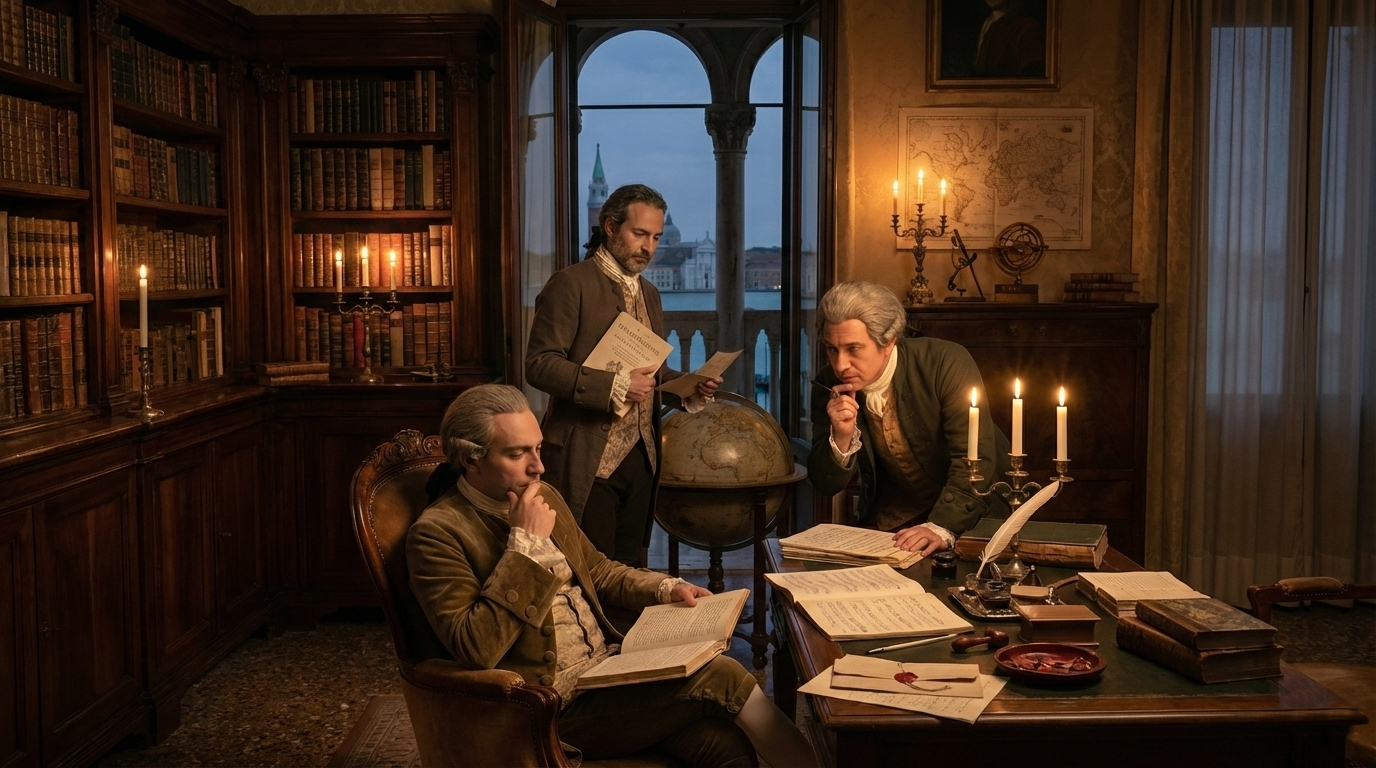
On the morning of May 5, 1784, Francesca Buschini-one of Casanova’s closest figures in his Venetian years-observed another balloon flight from the terrace of his house.
Chronicles also record his presence at the Casino dei Mongolfisti, a gathering place for fans of the new invention.
The fact that a woman – young and of a certain spirit, moreover – participated in such events confirms how much the arrival of the hot air balloons was perceived as a real city attraction.
Zaguri told Casanova about Buschini’s presence at the Casino dei Mongolfisti, and this simple news had an unexpected effect.
Casanova, now far from Venice, reacted with intense jealousy, interpreting that gesture as a lack of loyalty.
His irritation was such that he interrupted correspondence with the young woman for almost two years.
It is an episode that shows us a very human, vulnerable Casanova, deeply attached to the memory of his affections.
Venice’s interest in the hot air balloon was not an isolated case, but part of a broader openness to scientific innovations.
Zaguri, always curious about the inventions of his time, spoke of them with the same enthusiasm with which he commented on plays or mundane events.
This episode-between science and private life-returns to us a lively Venice, ready to be surprised, and two protagonists of 18th-century Venice caught in a moment of modernity and genuine emotion.
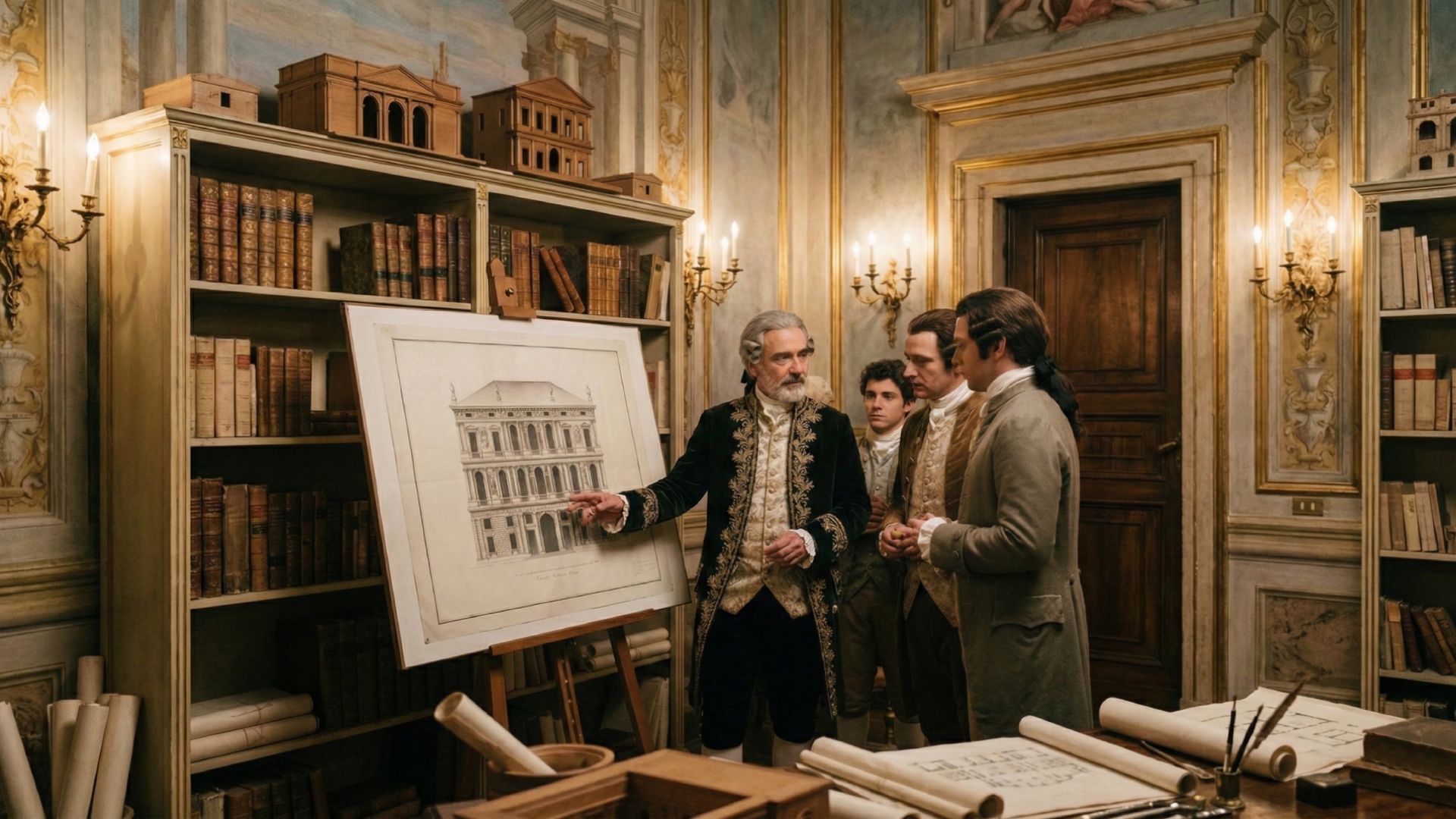
Would you like to discover the palace where Casanova actually lived? Visit the Permanent Museum dedicated to Giacomo Casanova at Palazzo Zaguri.