A century of change
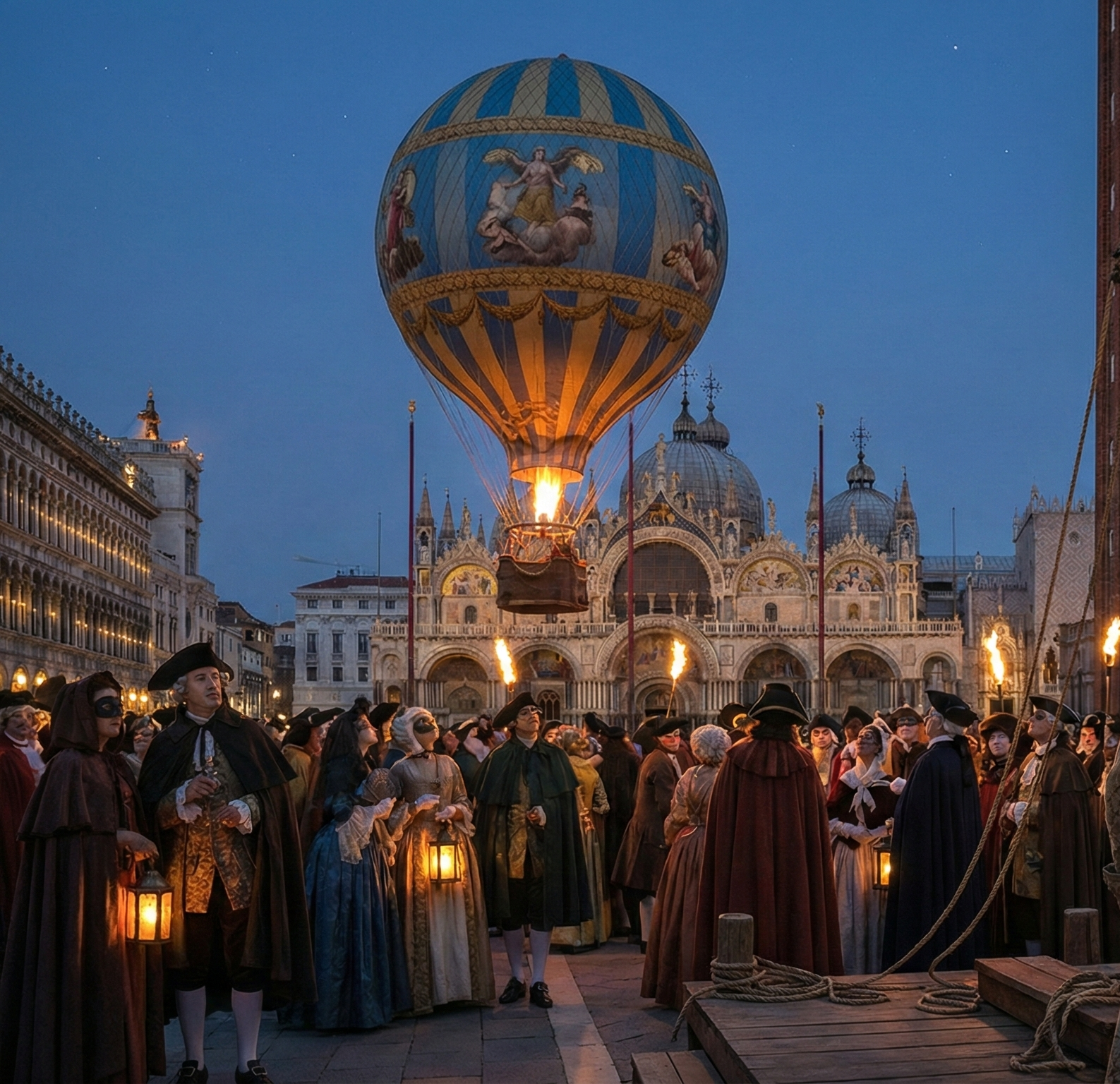
The last decades of the eighteenth century were a period of unrest and rapid circulation of ideas.
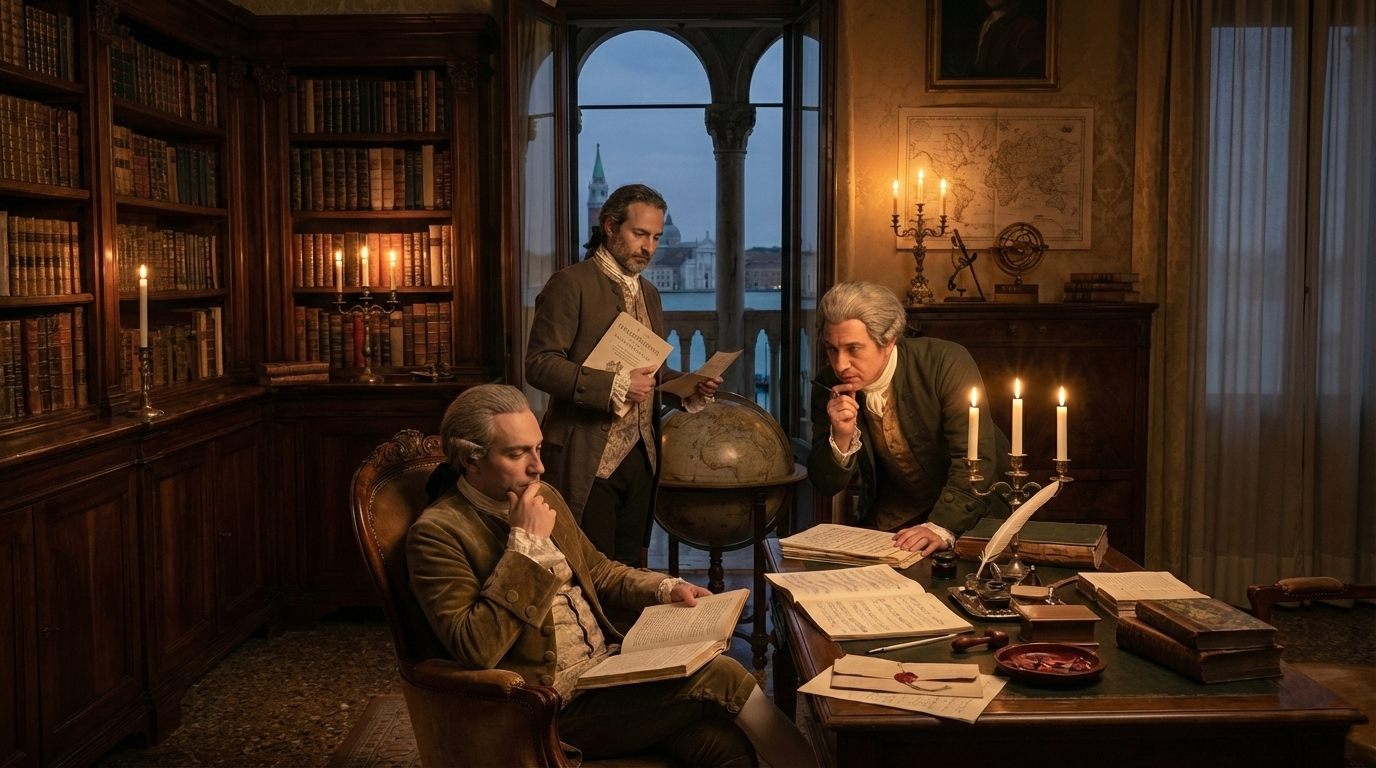
Pietro Zaguri, who remained in his native Venice, and Giacomo Casanova, by then settled in Dux, witnessed the same events from different perspectives, yet shared a common awareness: the aristocratic world in which they had grown up was gradually losing its familiar shape.
Their correspondence offers a subtle glimpse of the cracks emerging in a political and social order that had once seemed unshakeable but was now rapidly moving towards its collapse.
Zaguri and the French Revolution
When the first news of the French Revolution reached Venice, Zaguri followed events closely, with a mixture of curiosity and unease.
In the sonnets and epigrams he occasionally sent to friends, as well as in the reflections he shared with Casanova, he commented on:
- the violence of the revolutionaries;
- the fall of the monarchy;
- the execution of the king, an event that shocked the whole of Europe.
Although critical of the excesses of the Revolution, he recognised that its ideas, however distant they might seem, were also shaking the foundations of Venetian society.
The crisis of the Venetian patriciate
Zaguri, who was deeply familiar with Venetian political life, was often harsh in his judgement of his own social class.
He sometimes described it as weary, reluctant to fulfil its duties and too absorbed in worldly pleasures to notice the cracks emerging in the political system.
In one of his most striking remarks, preserved in his correspondence, he wrote:
“For everything you are better off than in the Council, always; in the Senate almost always; in the Magistrates you are better off in the Bath.”
A bitterly ironic observation that captures his perception of a ruling class resistant to change.
Even his own son showed sympathy for democratic and bourgeois ideas, reflecting a generational shift that was becoming impossible to ignore.
Casanova from Bohemia
Casanova, who had served as librarian at the Bohemian castle of Dux since 1785, experienced the same period of historical upheaval from a different, but no less intense, perspective.
Zaguri’s letters provided him with a vital link to Venetian life and to the intellectual currents sweeping across Europe.
In the profound isolation of Bohemia, he witnessed the gradual decline of the aristocratic world of his youth: its salons, brilliant conversations and political intrigues. Everything seemed to be losing its significance as new ideas reshaped the social order.
Napoleon’s victories
The arrival of French troops in Italy and Napoleon Bonaparte’s victories had a devastating impact on Venice.
Zaguri followed events closely, commenting on them in his letters with bitter irony, aware that the Serenissima no longer had the means to resist.
The fall of the Republic in 1797 marked the end of a political system that had endured for over a thousand years.
For Zaguri, it was a devastating blow: the end of an era, not only politically and institutionally, but also culturally and personally.
A shared epilogue
Casanova died first, in 1798, far from his native Venice.
Zaguri died a few years later, in March 1806, leaving his wife an estate that had been largely depleted, almost a tangible symbol of the decline of his family and the Venetian patrician class to which he belonged.
The lives of the two friends — so different yet so deeply intertwined — came to an end in the shadow of the same momentous historical transformation: the fall of the Serenissima, and with it the disappearance of a world that had shaped their identities.