
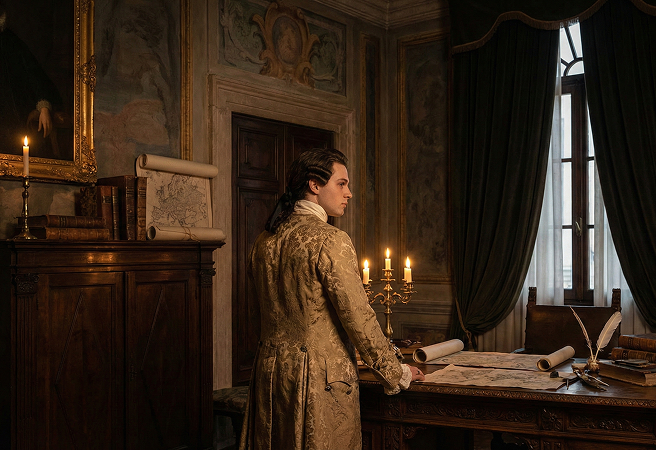
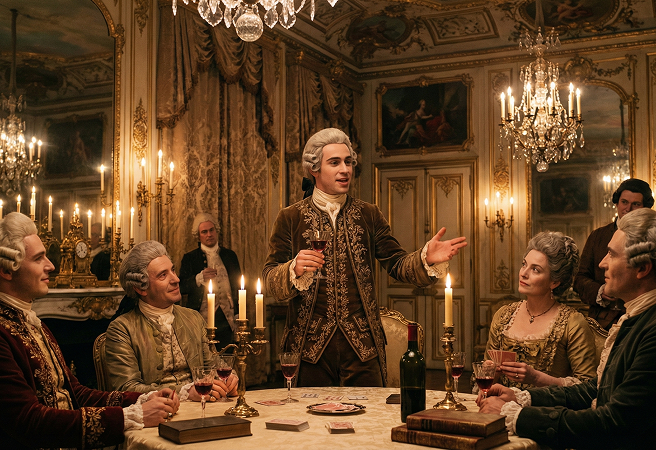
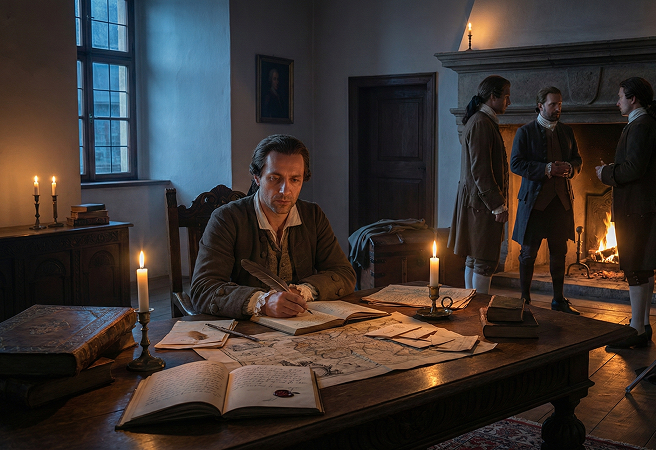
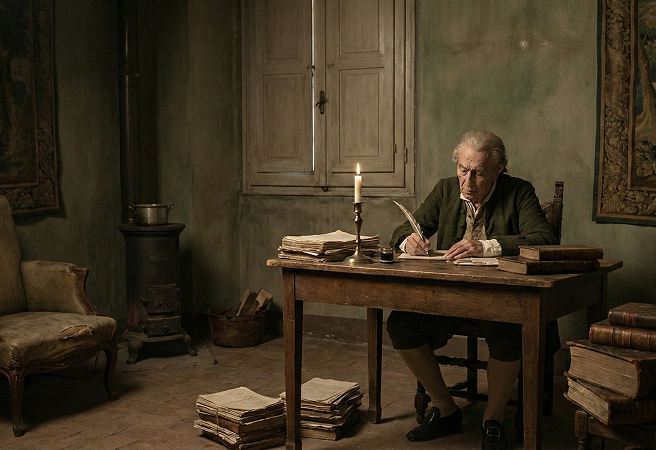

Giacomo Casanova’s life is inextricably linked to travel. Moving, crossing borders, getting to know new worlds was not a mere necessity for him, but a true form of existence.
His travels tell the story ofeighteenth-century Europe from a privileged point of view: that of someone living it from the inside, among courts, drawing rooms, cities and streets.
From the calli to the world: Italy
(1725-1749)
Venice is the starting point: the calli, the theaters, the first relationships.
From here Casanova moved on to Padua for studies, then Rome and Naples, where he came into contact with cultured and ecclesiastical circles.
Florence and Milan complete an initial map of travel that allows him to get to know Italy and, more importantly, men.
The heart of Europe: France
(1749-1760)
Paris welcomes and challenges him. In French salons Casanova gains attention, relationships and prestige, moving naturally in a cosmopolitan and competitive environment.
It is here that the journey turns into ambition. Success, however, is fragile: it only takes a little for the balance to break and force him to start again.
On the move continuously: central Europe
(1760-1774)
Germany, Switzerland and Austria become stages in a relentless movement. Casanova crosses borders, languages and cultures with the swiftness of one who knows how to reinvent himself.
Courts, gateway cities and new protections alternate relentlessly.
The journey is no longer choice, but destiny.
Toward Silence: Northern and Eastern Europe
(1774-1798)
In recent years, travel slows down and changes form. Movements to Northern and Eastern Europe mark a more reflective phase, marked by exile and distance.
It is here that Casanova begins to look back. The roads traveled become memory, and the journey continues on the written page.
The journey told
Through “Histoire de ma vie,” Casanova transforms his travels into narrative. Cities are not mere backdrops, but living spaces, observed with attention to social, political and human details.
Writing becomes the medium through which the journey continues through time, allowing the reader to traverse eighteenth-century Europe following his gaze.
I recount...
My connection with Zaguri
Pietro Zaguri was more than a friend to me: he was a confidant, an accomplice of spirit and wit. Among the rooms of his palace I found listening, protection and that freedom of thought without which my life would have no voice.