The arrival of hot air balloons in Italy
When the Montgolfier brothers pioneered hot-air balloon flight in France in 1783, the whole of Europe became fascinated by this new technological marvel.
Italy was not to be outdone: between 1783 and 1784, experiments multiplied, from Rome to Verona, from Pavia to Milan, involving scientists, curious onlookers and nobles eager to take part in what seemed to be a revolution in the way people viewed the world.
Venice, too, with its natural enthusiasm for spectacle and novelty, quickly embraced the excitement surrounding hot-air ballooning
The Venetian flight in 1784
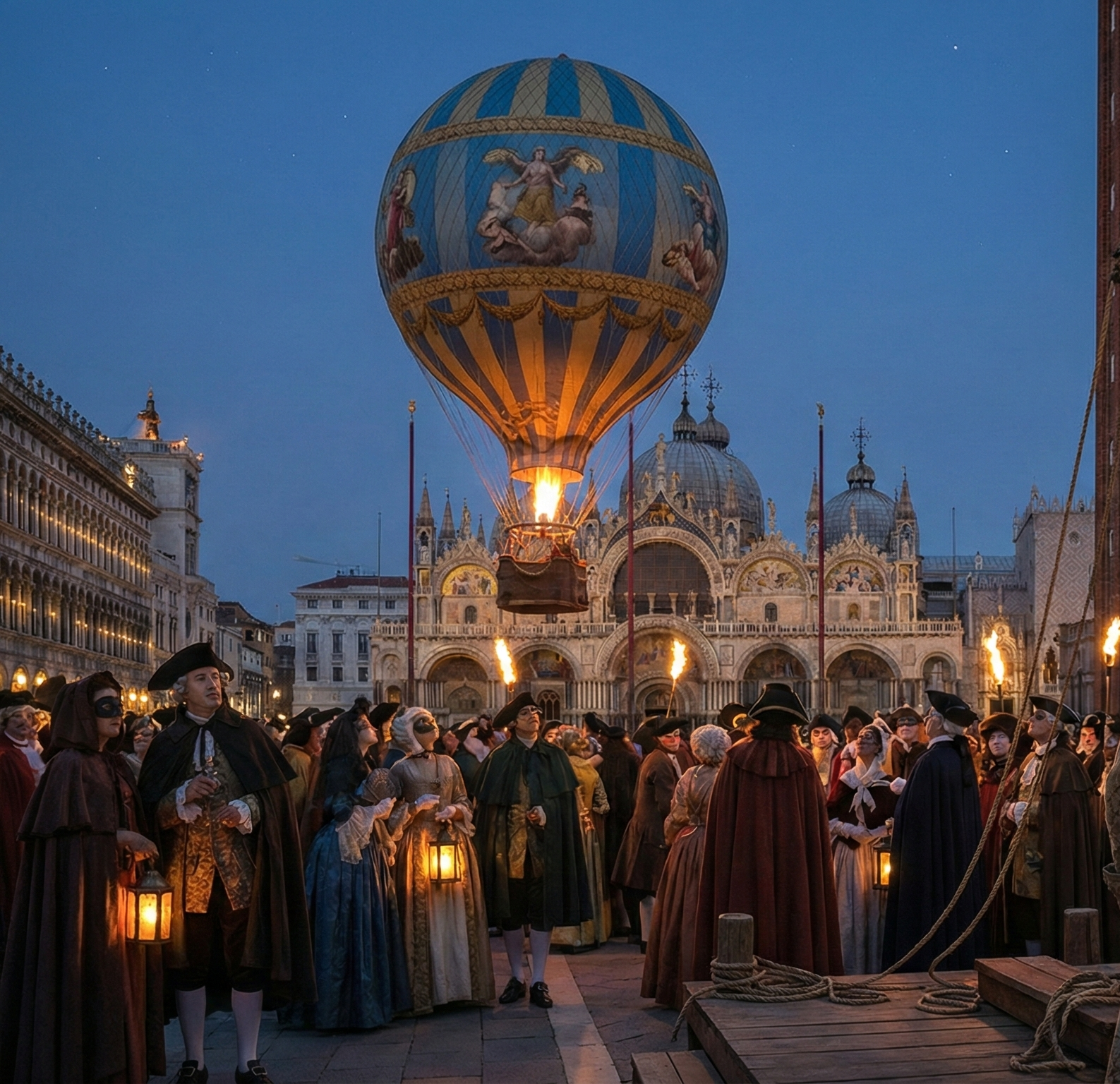
In April 1784, a group of Venetian patricians — including members of the Spinola and Avanzetti families — organised the launch of a hot-air balloon.
The event attracted a large crowd: Venice, a city with a long tradition of public celebrations and spectacular events, could hardly remain indifferent to the sight of a balloon rising into the sky above the lagoon.
As in the early French experiments, a cat and a dog were placed aboard the balloon to observe the effects of flight on living creatures.
The balloon, however, did not travel far: it came down on the nearby island of Burano, where its unexpected arrival frightened a local farmer. The incident soon became a widely circulated anecdote
The Spectacle Through Guardi’s Eyes
The painter Francesco Guardi, a keen observer of Venetian life, depicted the event in a painting that captures an atmosphere of wonder and curiosity.
The painting conveys not only the spectacle of the balloon flight but also the reactions of the spectators: amazement, disbelief and the sense of witnessing something entirely new.
It is one of the earliest visual records of hot-air ballooning in Venice, offering us a glimpse of how the event must have appeared to those who witnessed it.
Francesca Buschini and the Casino dei Mongolfisti
On the morning of 5 May 1784, Francesca Buschini, one of the women closest to Casanova during his years in Venice, watched another balloon flight from the terrace of Casanova’s house.
Contemporary accounts also record her presence at the Casino dei Mongolfisti, a gathering place for enthusiasts of the new invention.
The fact that a young, spirited woman took part in such events shows just how much hot-air ballooning had become a popular attraction in Venice.
Casanova’s jealousy
Zaguri informed Casanova of Buschini’s presence at the Casino dei Mongolfisti, and this seemingly insignificant piece of news had an unexpected effect.
Casanova, by then far from Venice, reacted with intense jealousy, interpreting her presence there as a sign of disloyalty.
His irritation was so great that he broke off correspondence with the young woman for almost two years.
The episode reveals a deeply human and vulnerable side of Casanova, a man who remained profoundly attached to the people he loved, even from afar.
A curious and modern city
Venice’s interest in hot-air ballooning was not an isolated phenomenon, but part of a broader openness to scientific innovation.
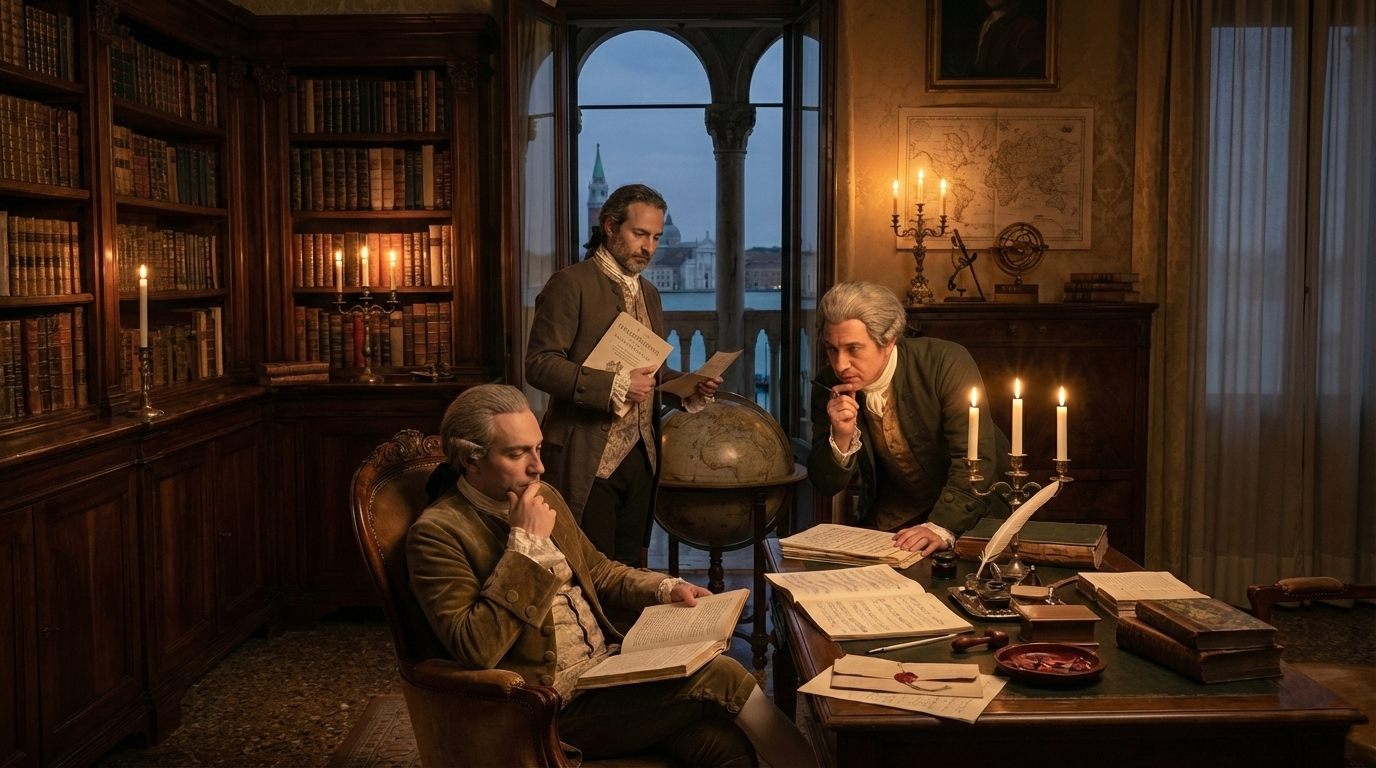
Zaguri, always curious about the inventions of his time, discussed them with the same enthusiasm he brought to conversations about theatre or social events.
This episode — blending science and private life — offers us a glimpse of a vibrant Venice, eager to embrace new discoveries, and of two figures from eighteenth-century Venetian society caught up in a moment of innovation and genuine emotion.