 Sabine Herrmann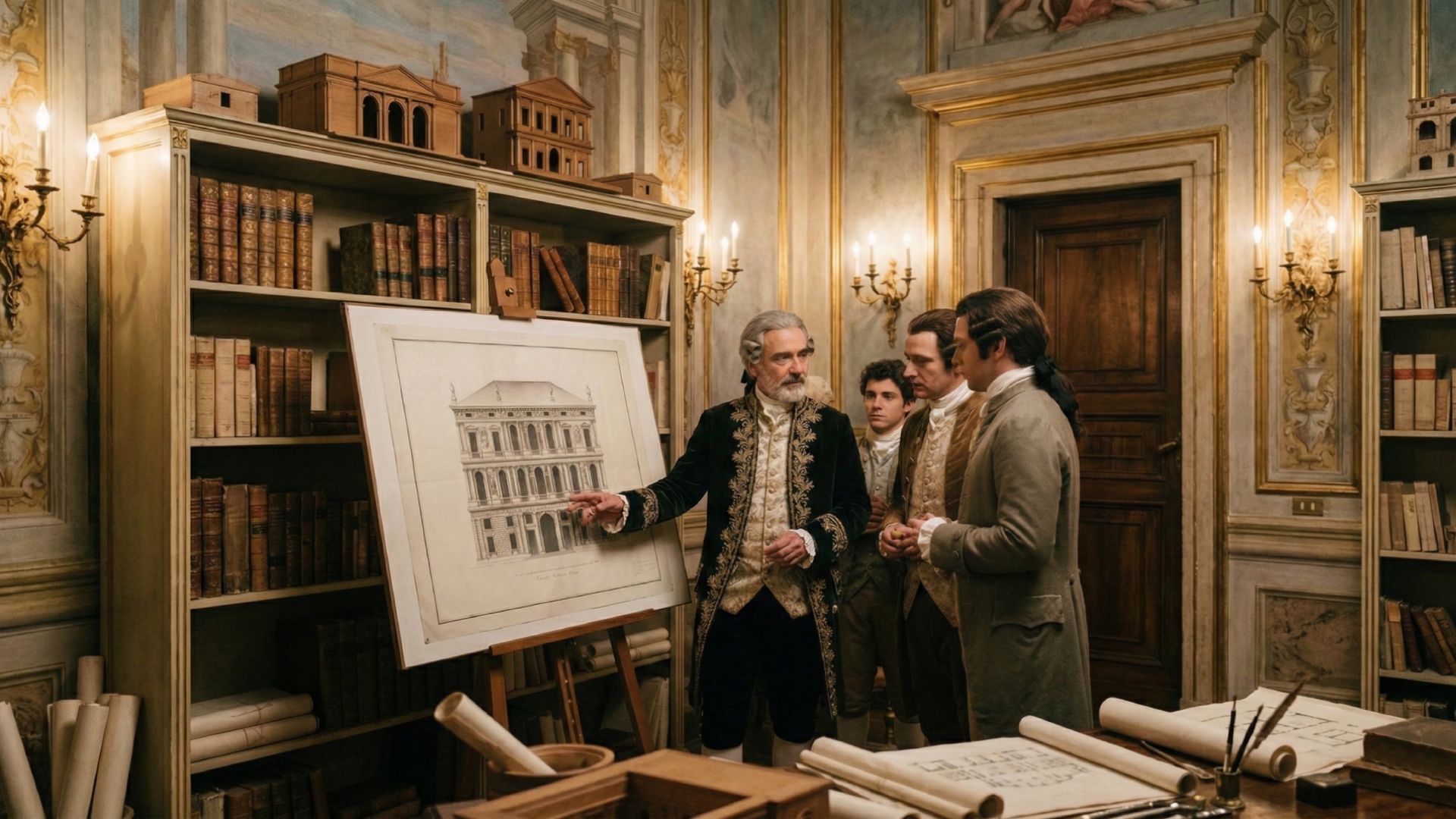
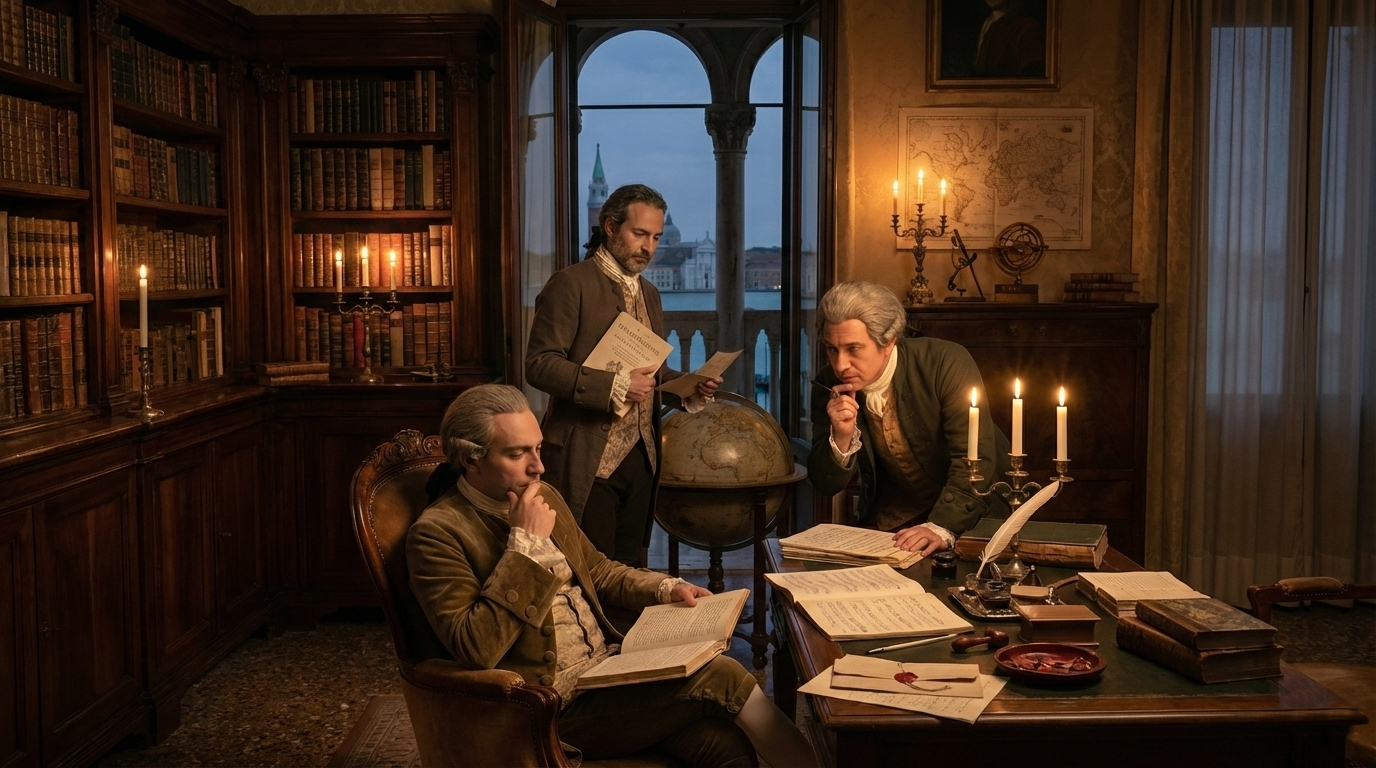
Alongside his public offices and Venetian social life, Pietro Zaguri passionately cultivated the art of writing. He composed poems, plays and short cheerful works, often intended to circulate in the city’s cultural salons. Writing was for him a place of intellectual pleasure and observation of human behavior, a way to reflect ironically on the vices and virtues of Venetian society.
Zaguri’s best-known works include the comedy “Leo and Juliet,” which he himself recalls in a letter to Casanova, mentioning the success he achieved in those years.
The story revolves around the old philosopher Leo, who tries to persuade his young pupil-the son of a prince-to control his passions, especially his amorous ones. The boy, however, is hopelessly in love with Julia, and does not seem willing to accept the master’s recommendations. Eventually even the frivolous Giulia changes character, choosing as her husband not the prince but his secretary, a character judged more “suitable.”
The plot, both playful and moral, reflects the Venetian theatrical taste of the time and Zaguri’s ability to alternate between levity and psychological observation.
Zaguri’s literary work was received with sympathy by many contemporaries. Girolamo Dandolo, one of his most affectionate critics, wrote:
“Who knows what better judgment had been made of his poetic worth, if he could have brought forth from the Padua presses a volume of his miscellaneous poems, which he was ordering, when death seized him from it?”
This testimony gives us insight into how Zaguri was considered a promising author, capable of a natural talent that would perhaps have found greater recognition had he not been interrupted by death.
Among Zaguri’s most enduring passions wasarchitecture, to which he devoted himself with surprising constancy. He was not a professional architect, but an educated amateur, driven by aesthetic curiosity and a desire to improve the spaces of his city.
He made plans for churches, bridges, and theaters, as well as work in his home, such as the rebuilding of the mezzanine of the Zaguri Palace.
His best-known contribution is the facade of the church of San Maurizio.
For this project he was probably inspired by Sansovino ‘s design for the church of San Geminiano, which once stood in front of the Basilica of San Marco and was later destroyed by the Napoleonic army.
Zaguri reinterpreted the Sansovinian model according to his personal taste: a balance between elegance, movement, and freer ornamentation than the emerging rigor of the neoclassical style.
In his correspondence with Casanova, particularly in a letter datedOctober 8, 1790, Zaguri also mentions plans for La Fenice Theater, a sign of his involvement in the Venetian cultural scene.
These works testify to his attention to theater, not only as an author but also as an observer of stage spaces and their aesthetic requirements.
Stylistically, Zaguri rejected neoclassicism, then in rapid ascendancy, preferring the more fluid, elegant and decorative Rococo style.
This choice also led him to a lively confrontation with Andrea Memmo, Casanova’s friend and a central figure in reforming Venice. The contrast reflects the aesthetic tension of the time: on the one hand the new rational and severe taste, on the other the freer and more playful late 18th-century taste, which Zaguri continued to defend.
Would you like to discover the palace where Casanova actually lived? Visit the Permanent Museum dedicated to Giacomo Casanova at Palazzo Zaguri.