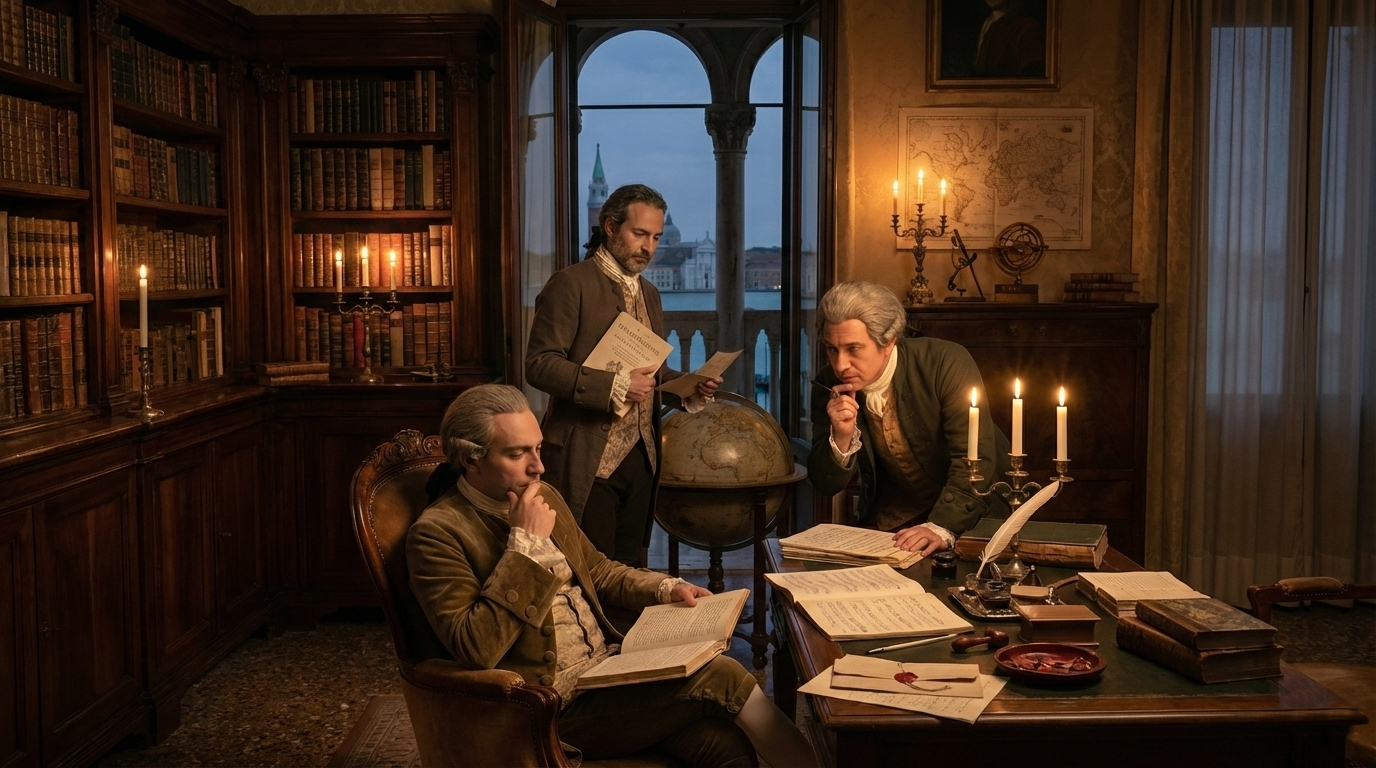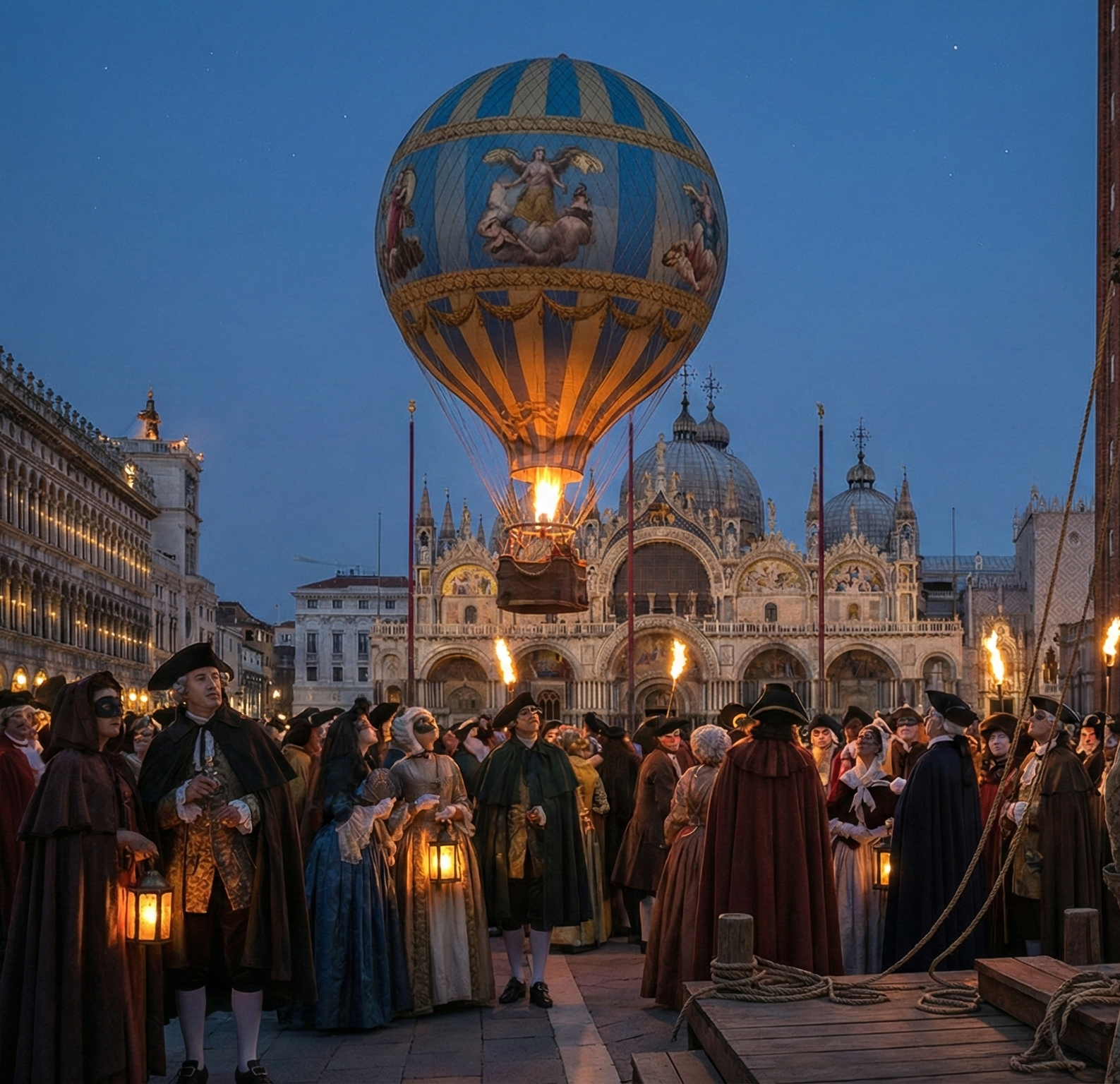
Giacomo Casanova is one of the most complex and fascinating figures of eighteenth-century Europe.
To reduce him to the role of a seducer alone would be to ignore the depth of his thought, the breadth of his experiences, and the historical value of his testimony.
This section collects curiosities, anecdotes, and authentic quotations that allow us to approach Casanova through his words and his real life: that of a cultured, restless, free man, capable of observing the world with critical intelligence and surprising modernity.
Curiosities about Casanova
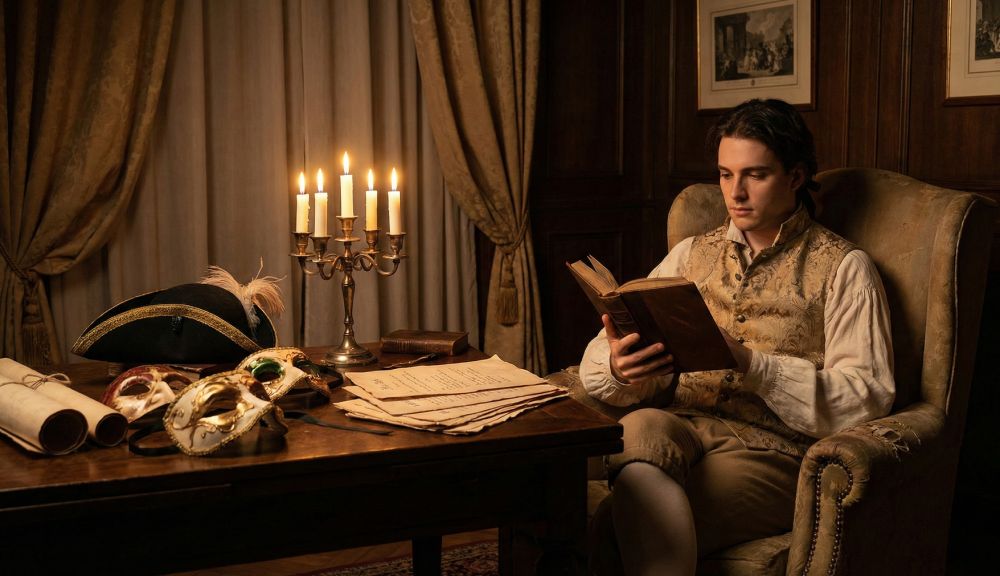
Casanova was born in Venice into a family of actors, an environment that exposed him from a young age to theater, speech and performance.
He studied law, took an interest in mathematics, philosophy and science, demonstrating an intellectual curiosity rare for the time.
He spoke multiple languages, wrote elegantly, and could adapt to very different social contexts. This versatility allowed him to move with ease among nobility, ecclesiastical circles, and cultural circles.
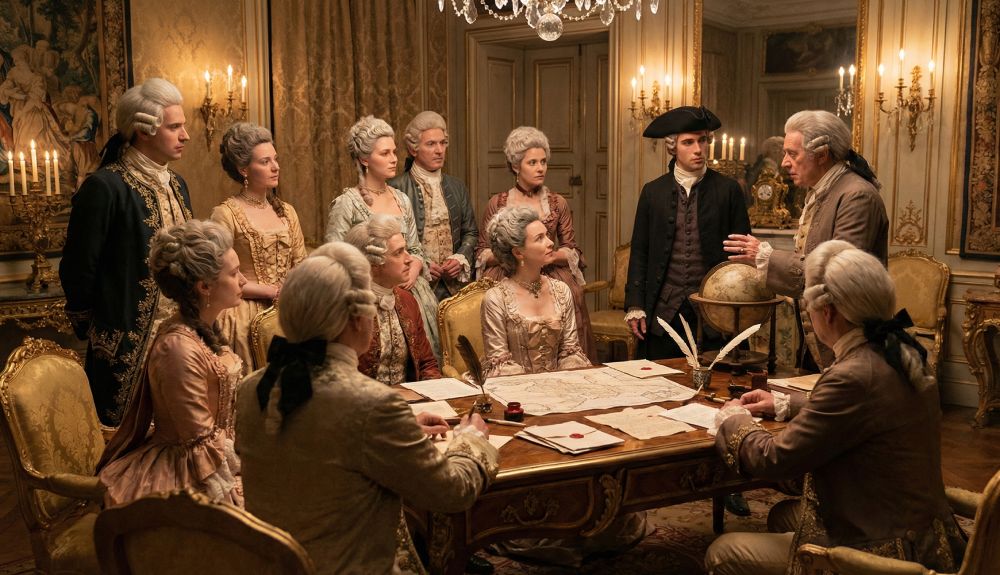
Giacomo Casanova spent much of his life traveling, passing through the major cultural capitals of Europe? From Paris to London, from Berlin to St. Petersburg, each city became a place of study, observation and relationship for him, not just passing through.
In his travels he met philosophers, scientists, musicians, rulers and intellectuals, coming into contact with very different environments. These experiences helped form a broad and modern worldview, which emerges clearly in his works and letters.
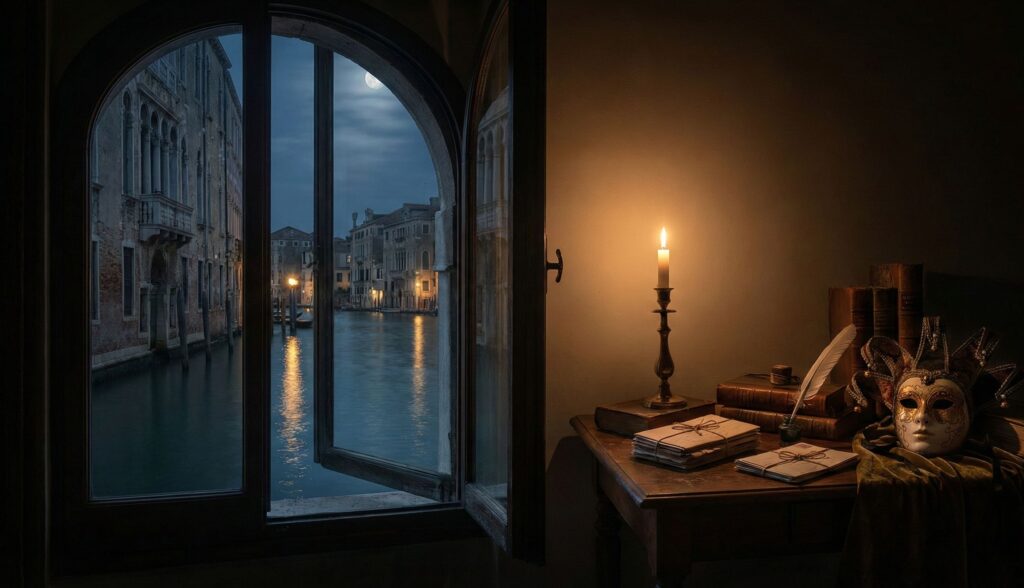
Venice was not only Casanova’s birthplace, but the constant reference point of his life. Even during periods of distance, the city remained for him a model of freedom, ingenuity and contradiction, ever present in his writings.
Eighteenth-century Venice was a crossroads of cultures, trade and ideas, capable of welcoming artists, travelers and thinkers. This context profoundly influenced Casanova’s education, fueling his curiosity, critical spirit and adaptability.
The most famous quotes
Casanova’s quotes allow us to enter directly into his mind.
Through his writing, a man emerges who is ironic, lucid, sometimes disenchanted, but always deeply aware of himself and his time.
His words are never decorative: they are reflections, confessions, and social observations that tell of freedom, desire, the value of experience, and the relationship with the passing of time.
Curiosity is the real engine of intelligence.
I write so that memory does not betray what I have experienced.
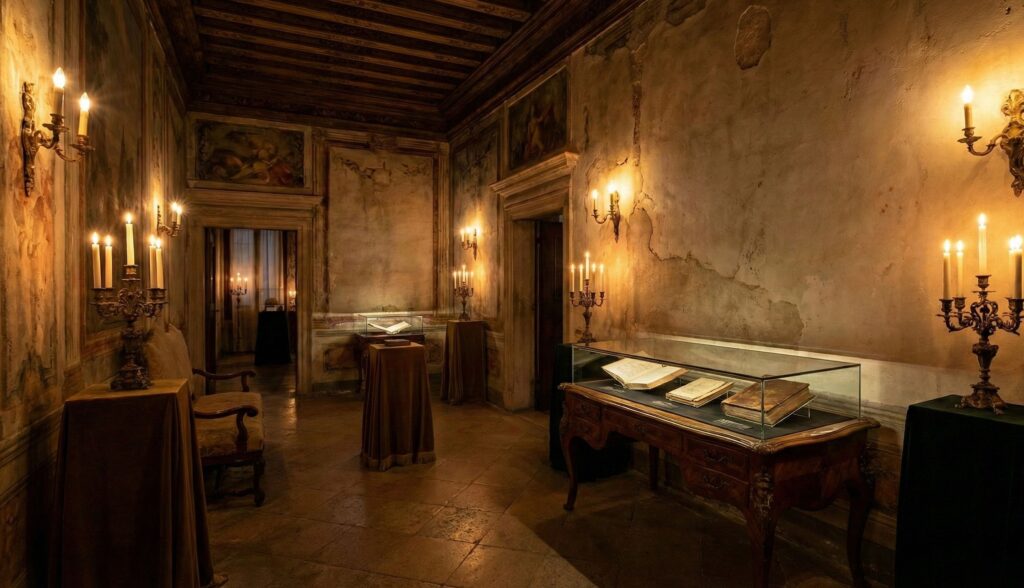
From words to experience
Casanova Journal
Content compiled by scholarly experts by our Scientific Committee to tell Casanova with depth, rigor and authenticity.