Da Ponte in literary Venice
Before becoming Mozart’s celebrated librettist, Lorenzo Da Ponte lived in Venice decisive years of his intellectual formation.
The city offered a unique cultural scene: theaters among the most prestigious in Europe, literary salons, learned conversations, and an atmosphere of lively circulation of ideas.
In this context Da Ponte refined the taste for poetry, theater and observation of human characters that would mark his future career.
The entrance to Zaguri’s house
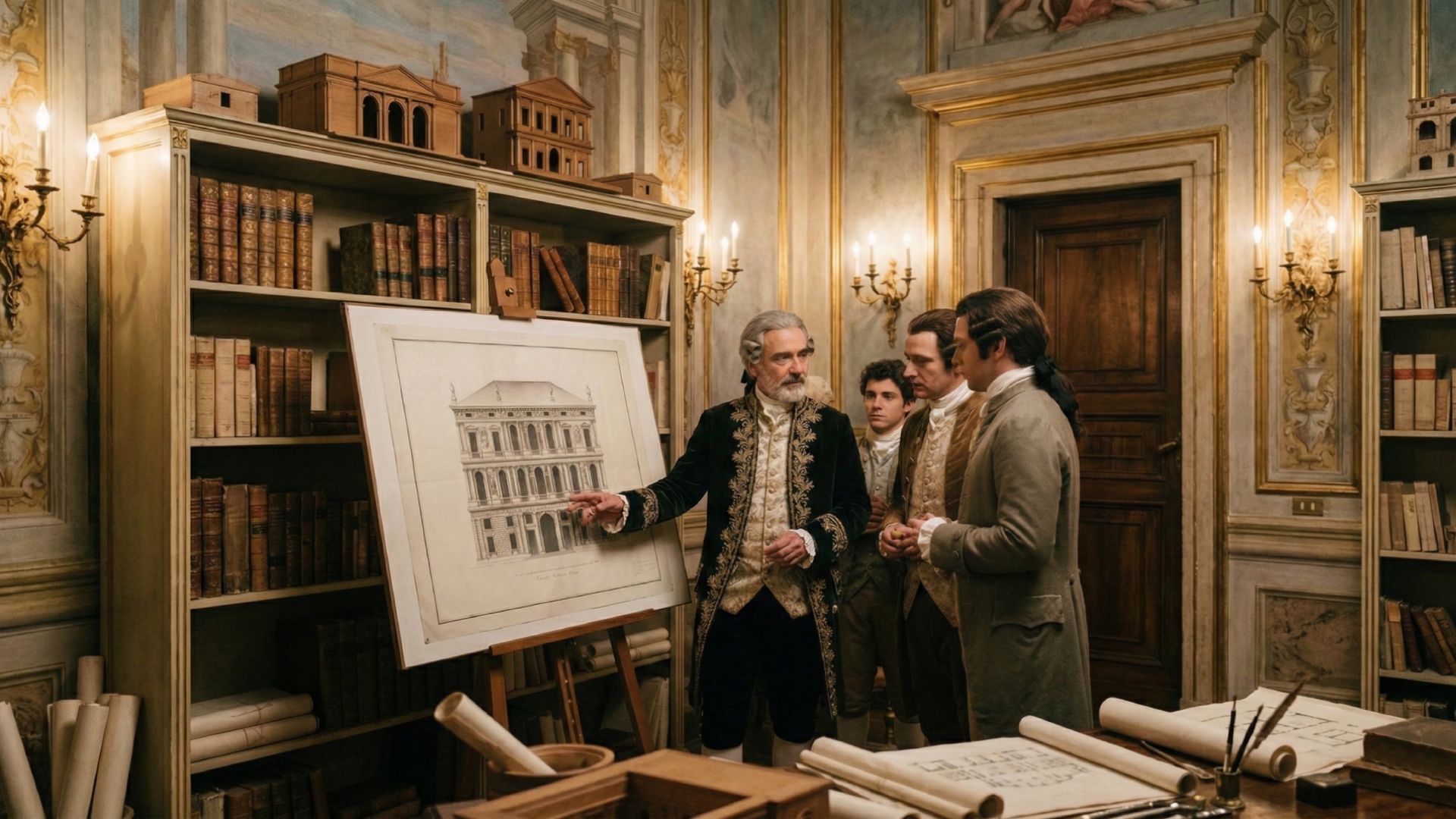
According to his memoirs, Da Ponte found in Pietro Zaguri a patron and a cultural reference.
Zaguri welcomed him into his home not only as a secretary, but as a promising young intellectual, offering him an environment where he could read, discuss and educate himself.
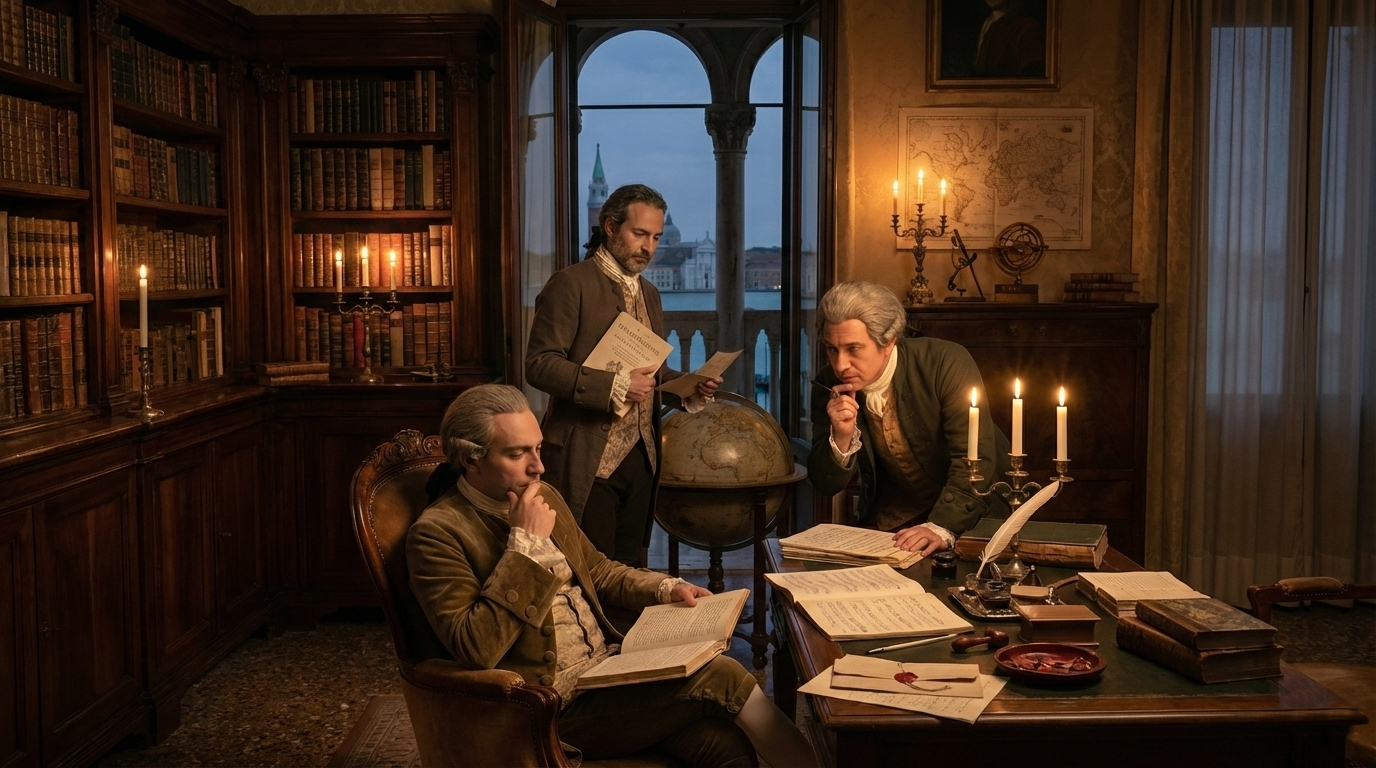
Indeed, Zaguri’s house was a crossroads of educated patricians, writers and men of the theater-a place where ideas circulated naturally.
A “fellow student”
Da Ponte recounts that he was for a time Zaguri’s “fellow student”: a definition that reveals an intense intellectual relationship, made up of exchanges, dialogues and a shared concern for poetry and literature.
Zaguri, who loved theater and writing, found in Da Ponte a kindred spirit, a young man capable of absorbing and reworking the culture of the time.
The meeting with Casanova
It was precisely in 1777, at Zaguri’s residence, that Da Ponte met Giacomo Casanova.
The Venetian adventurer, who had recently returned to the city, frequented the palace and participated in the conversations that enlivened Zaguri’s evenings.
The meeting between the two-so different in character and destiny-represents a significant moment in Venetian cultural life:
a young man of letters in training, a cultured patrician and a man of extraordinary life, brought together for some time under the same roof.
Tensions and estrangement
Despite the promising beginning, the relationship between Da Ponte and Zaguri did not last indefinitely.
The young librettist, endowed with a restless spirit and a lively love life, came into conflict with the patrician, who ended up driving him away from his home.
The episode, though minor in the biography of both, shows well Zaguri’s sensitivity, prone to friendship but also to disillusionment, and Da Ponte’s mobile and unpredictable nature.
A cultural environment in turmoil
The brief cohabitation of Da Ponte, Zaguri, and Casanova reveals the richness of the Venetian intellectual scene in the 1770s.
These were years when the arts, politics, literature, and social life were naturally intertwined, creating spaces for confrontation and creativity.
In this network of encounters and personal ties, Da Ponte’s talent was formed, Zaguri’s culture was consolidated, and Casanova’s luminous personality found an echo.